From Detroit to Everywhere: The Sonic Journey That Redefined What Soul Could Be
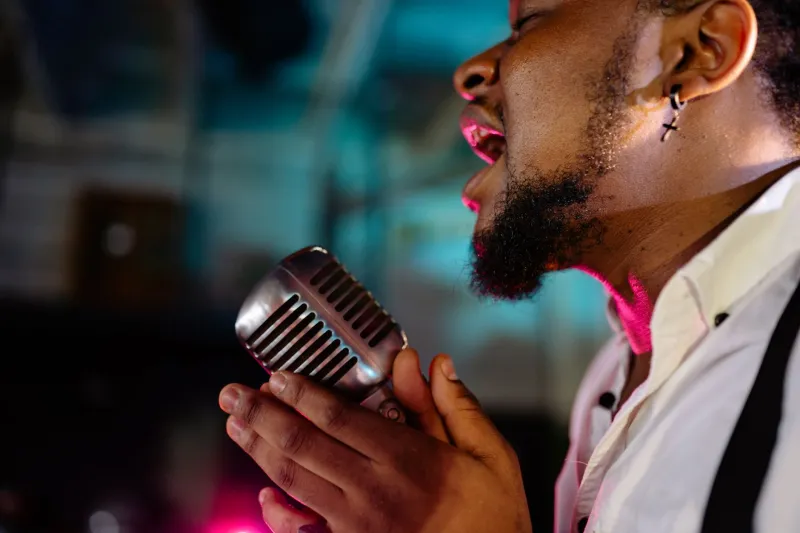
There's a certain kind of artist who doesn't chase trends. They don't pivot when the charts shift or rush to collaborate with whoever is hot that particular summer. Dwele has always been that kind of artist — the kind whose catalog rewards patience, whose records reveal new layers on the fifth listen that you completely missed on the first. And when you step back and look at the full arc of his discography, what you find is something genuinely rare: a consistent artistic vision that never stopped growing.
Let's talk about how we got here.
The Foundation: Detroit's Soul Imprint
You can't talk about Dwele without talking about Detroit. The city has always had its own relationship with soul music — something grittier, more industrial, more emotionally direct than what was coming out of Philadelphia or Atlanta. Growing up surrounded by that tradition gave Dwele a musical foundation that was both deeply rooted and quietly rebellious. He absorbed the classic Motown influence the same way every Detroit kid does, almost by osmosis, but he was also listening to jazz, hip-hop, and the kind of neo-soul that was bubbling up through artists like D'Angelo and Erykah Badu in the late '90s.
His debut album, Subject, released in 2003, was the first real statement. The production — largely handled with collaborators from the Detroit underground — had this beautifully raw quality. Tracks like "Find a Way" moved with the kind of unhurried confidence that didn't need a radio-ready hook to justify itself. The vocals were intimate, almost conversational, and the instrumentation felt like it was breathing alongside the lyrics rather than performing beneath them. It was a debut that announced someone who had genuinely thought about what kind of artist he wanted to be.
The Middle Period: Expanding the Palette
If Subject introduced Dwele, then Some Kinda... (2005) and W.ants W.orld W.omen (2007) showed what he could do when he started stretching. The production choices on these records got more adventurous — there was more interplay between live instrumentation and programmed elements, more willingness to let a track sit in an unexpected groove for a while before resolving. The hip-hop influence became more explicit too, and not in a forced way. Songs from this era found a natural space where soul vocals and hip-hop production sensibility weren't fighting each other but actually amplifying each other.
This was also the period when Dwele started showing up on other people's records in ways that expanded his profile significantly. His feature work — including appearances alongside some of hip-hop's biggest names — introduced him to audiences who might never have sought out a neo-soul record on their own. What's interesting is how those collaborations never felt like compromises. He'd bring the same vocal approach, the same emotional directness, and it worked in contexts that were pretty far from where he started.
Production Philosophy: Live Feels Over Perfection
One of the things that separates Dwele's catalog from a lot of contemporary R&B is a consistent resistance to the kind of over-polished production that can make records feel antiseptic. There's always been a preference for something that feels lived-in — a piano part that has a little grit to it, a drum pattern that swings slightly rather than sitting perfectly on the grid. This isn't accidental. It reflects a genuine philosophy about what soul music is supposed to do.
Soul, at its core, has always been about emotional truth over technical perfection. The classic records that defined the genre — from Marvin Gaye to Al Green to Stevie Wonder — weren't soul because they were flawlessly executed. They were soul because you could feel something human in them. Dwele has carried that understanding forward into a production era that makes it increasingly easy to sand down all the edges until nothing feels real anymore.
Later Work: Maturity Without Compromise
By the time Greater Than One (2011) arrived, Dwele had hit a kind of mature stride that a lot of artists spend entire careers chasing. The record felt assured in a way that only comes from years of knowing exactly who you are and what you're trying to say. The production was more refined but hadn't lost its warmth. The writing was more introspective, dealing with themes of growth, relationships, and identity with a nuance that went well beyond the surface level.
What's particularly striking about this phase of his catalog is how it holds up against what was happening in mainstream R&B at the time. The genre was shifting hard toward a more electronic, club-oriented sound, and Dwele simply didn't follow. Not out of stubbornness — more out of a clear-eyed understanding that the music he was making had its own audience, its own purpose, and its own integrity that would outlast any particular trend cycle.
The Lasting Influence
It's worth pausing to acknowledge how many artists working today carry some trace of what Dwele established. The willingness to blend jazz harmony with hip-hop rhythm, to let a vocal performance breathe without over-producing it, to write about emotional complexity without dumbing it down — these are things you can hear in a pretty wide range of contemporary R&B. Not always with direct attribution, because influence rarely works that cleanly. But the thread is there.
For fans who've been along for the whole ride, that's a satisfying thing to recognize. And for anyone who's newer to the catalog, it makes going back through the records feel like discovering a missing piece of a larger story — the story of how soul music kept finding ways to stay alive and relevant without selling itself out.
That's the Dwele legacy in a nutshell: a Detroit kid who trusted his instincts, refined his craft over decades, and ended up helping define what authentic R&B sounds like in the modern era. Not bad for someone who never chased a trend in his life.