In the Room Where It Happens: What Dwele's Collaborators Won't Let You Forget
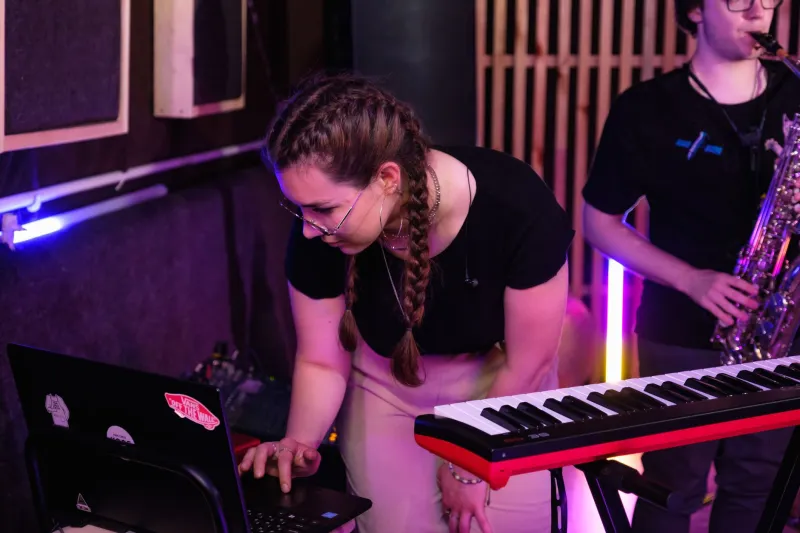
Before you hear a Dwele record, someone else heard it first. A producer adjusting levels at 2 a.m. A session musician running a chord voicing for the fourth time until it landed just right. An engineer who learned quickly that "close enough" wasn't a phrase that had much currency in that room.
The music doesn't make itself. And the people who've been part of making it have stories worth telling.
The Unspoken Standard
Anyone who's spent time working with serious artists will tell you there's usually a moment — early in the process — when the vibe of that particular creative space announces itself. Some rooms are loose and spontaneous. Some are chaotic but productive. Some are so locked down creatively that collaborators feel more like employees than partners.
Dwele's room, by most accounts, is something else entirely. The standard isn't posted on a wall. Nobody hands you a rulebook. But it becomes clear pretty quickly that the bar in this space is set somewhere above where most people are used to working.
Producers who've contributed to his projects describe a specific kind of attentiveness in the way Dwele engages with a beat or a chord progression. He's not passive. He's not the kind of artist who shows up, lays down vocals, and disappears. He's in the details — the texture of a synth pad, the space between a bass note and the kick, the way a melody breathes or doesn't. That level of engagement changes how everyone else in the room works. You can't coast when the person next to you is listening that hard.
What Perfectionism Sounds Like in Practice
The word "perfectionist" gets thrown around a lot in music, sometimes as a compliment and sometimes as a polite way of saying someone is difficult to work with. With Dwele, the people who've been in the room tend to make a distinction: his perfectionism isn't about ego. It's about the song.
There's a difference between an artist who wants things done their way because they need control and an artist who pushes for precision because they genuinely believe the song deserves it. The former exhausts collaborators. The latter tends to inspire them — even when it's uncomfortable.
Engineers who've worked on his records talk about the way he'll return to a vocal phrase not because it was technically wrong but because something in the feeling wasn't quite there yet. It wasn't landing in the pocket he heard in his head. That pursuit — chasing the feeling rather than just the performance — is a different kind of exacting. And it's the kind that produces music with genuine emotional weight.
Musicians describe a similar dynamic. The arrangement conversations aren't just about what notes to play. They're about what the notes are supposed to communicate. Is this chord voicing too busy? Does that run distract from the lyric? Is the space in this bridge doing enough work? These aren't questions every artist asks, and the fact that Dwele asks them shapes the whole collaborative environment.
Mutual Respect as a Creative Foundation
One thing that comes up consistently when people talk about working with Dwele is the mutual nature of the creative exchange. He has standards, yes. He has a clear vision for his music, absolutely. But the collaborators who've worked with him don't describe feeling steamrolled or dismissed. They describe feeling heard.
That matters more than it might seem. The music industry has no shortage of artists who treat session musicians like furniture and producers like tools. The creative cost of that dynamic is real — people stop bringing their best ideas into a room where they feel like their input isn't valued. The work suffers for it, even if the artist never knows why.
In Dwele's creative space, the dynamic seems to work differently. People bring more of themselves because the environment makes that feel worthwhile. A producer who suggests a left-field arrangement choice gets a genuine listen rather than a dismissal. A musician who offers an alternative voicing gets a real response. That openness — held in tension with his clear artistic standards — is what makes the collaboration productive rather than just technically precise.
The Rituals That Make the Room
Every artist who takes their work seriously has rituals — patterns and practices that signal to their brain that it's time to make something real. In some cases these are elaborate. In others, they're almost invisible. But they're always there.
From what collaborators describe, Dwele's creative rituals tend to center on listening. Before recording, before diving into arrangement decisions, there's often a phase that's just about absorbing. Sitting with a track. Letting a concept settle. Not rushing toward execution before the idea has fully formed.
For collaborators used to faster-paced sessions, this can feel unfamiliar at first. The music industry's default mode is speed — get in, get it done, move to the next thing. Dwele's pace is deliberately different, and the people who've adjusted to it tend to describe the experience as creatively expansive rather than frustrating. When you're not rushing, you notice things. You catch the detail that would have been buried. You find the version of the song that's actually better than the first one you recorded.
What You Take With You
The collaborators who've spent real time in the studio with Dwele tend to talk about the experience in a particular way: as something that changed how they work. Not just on his music, but on everything after.
That's the quiet legacy of working with someone who genuinely cares about craft. It recalibrates your standards. It reminds you what the work can be when everyone in the room is fully present and fully committed. You can't unknow that. You carry it into every session that follows.
For fans, that's the invisible layer underneath every Dwele record. The music you hear is the result of a room full of people who were asked — without being asked — to give everything they had. And they did.