Influence Without the Algorithm: Why Every Serious Soul Artist Is Studying Dwele
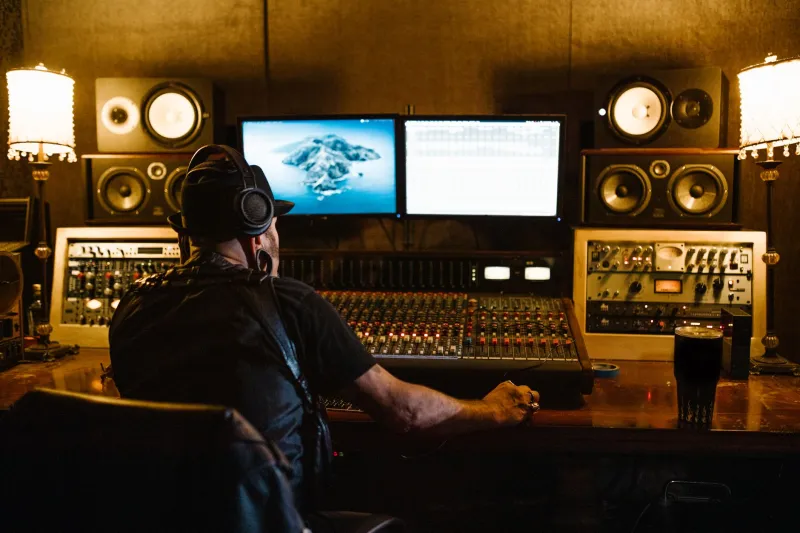
There's a quiet conversation happening in studios from Atlanta to Los Angeles, in Zoom sessions between up-and-coming producers and in the DMs of songwriters trying to figure out what real music even means anymore. And Dwele's name keeps coming up.
Not because he just dropped a viral single. Not because he's plastered across a streaming platform's editorial playlist. It's something harder to pin down — and honestly, more interesting. Dwele represents a kind of creative integrity that younger artists are increasingly hungry for, precisely because the industry keeps telling them to want something else entirely.
The Counter-Move That Became the Blueprint
Let's be honest about the moment we're living in. The music business rewards speed, volume, and social media omnipresence. Drop a song, post a reel, repeat. The pressure to stay visible — to be everywhere — has never been more intense. And yet, right in the middle of all that noise, artists keep circling back to a guy from Detroit who never played that game.
Dwele's discography doesn't read like a chase. Subject, Some Kinda.., W.ants W.orld W.omen — these albums were made with a patience and a point of view that felt almost radical for their time. He wasn't trying to sound like whatever was charting. He was building something that sounded unmistakably like him, and he trusted that to be enough.
Here's the twist: that refusal to conform is now being studied like a masterclass.
Why Producers Keep Coming Back to His Catalog
Talk to producers who are serious about their craft — not just beatmakers chasing placements, but people who think deeply about texture, space, and emotional resonance — and Dwele's name surfaces constantly. The reason isn't complicated. His music is a clinic in restraint.
The arrangements on his records leave room to breathe. There's no sonic clutter, no unnecessary layering just to fill space. Every element earns its spot. For producers learning to trust negative space — to let silence do some of the heavy lifting — Dwele's catalog is one of the most instructive bodies of work in contemporary R&B.
And then there's the vocal production. Dwele's voice is treated as an instrument in the truest sense, woven into the fabric of the track rather than placed on top of it. That integration, that sense of a record feeling whole rather than assembled, is something producers chase for years before they figure out how to do it intentionally.
The Songwriter's Perspective
Songwriters who care about language — and there are still plenty of them — find something different in Dwele's work. He's never been a lyricist who mistakes density for depth. His writing is economical in the best way, choosing the precise phrase over the impressive one, the honest image over the clever one.
That approach is increasingly rare, and increasingly valuable. In a landscape where hooks are engineered for fifteen-second attention spans, Dwele's songs reward repeated listening. They reveal themselves slowly. Lines that seemed simple on first play carry more weight the fifth time around. That's not an accident — it's a skill, and younger songwriters are recognizing it as one worth developing.
When a lyricist can make you feel something without spelling out every emotion, that's craft at a high level. Dwele has been doing it for over two decades.
Cultural Weight vs. Chart Position
Here's where the conversation gets genuinely interesting. By conventional metrics — streaming numbers, chart peaks, social media following — Dwele isn't competing with the biggest names in R&B. But cultural influence doesn't run on those metrics, and the music community has always known that.
Think about the artists who shaped how R&B sounds today. Not all of them were chart dominators. Some of them were the musicians that other musicians obsessed over. The reference point in the studio. The name dropped in interviews by people who went on to sell out arenas. That's a specific kind of legacy, and it's arguably the most durable kind.
Dwele occupies that space. When artists who are moving massive streaming numbers cite him as a formative influence, that's not a footnote — that's the story. His fingerprints are on music that reaches millions of people, even when his name isn't on the marquee. That's a different kind of reach, and a different kind of power.
The Psychology of the Authentic Reference Point
There's something worth exploring in why younger artists gravitate toward Dwele specifically when they're trying to find their footing. Part of it is the music itself, obviously. But part of it is what he represents as an artist navigating the industry.
He built a career without abandoning his creative center. He collaborated with major names — Common, Kanye West, J. Dilla — without losing his own voice in the process. He stayed rooted in Detroit's musical identity while developing a sound that resonated far beyond any regional boundary. For artists trying to figure out how to grow without selling out, that trajectory is genuinely instructive.
Dwele's career answers a question a lot of young artists are asking: Can you stay true to yourself and still matter? The answer, based on the evidence, is yes. More than that — it might be the only way to matter in the long run.
What the Streaming Era Gets Wrong
The algorithm optimizes for engagement, not influence. Those are very different things. Engagement is a like, a share, a stream that gets counted and reported. Influence is what happens when an artist's work changes how another artist thinks about music — and that effect ripples outward in ways no dashboard can measure.
Dwele's impact is the kind that compounds over time. Every producer who internalizes his approach to arrangement carries that forward into their own work. Every songwriter who studies his lyrical economy brings that discipline to their own records. Every singer who listens closely to how he handles a vocal performance walks away with something they'll use for the rest of their career.
That's not a streaming number. That's a legacy.
The Long Game, Played Right
What makes Dwele's story worth telling — worth revisiting, worth digging into — is that it's a genuine alternative model. In an industry that constantly pushes artists toward short-term thinking, he represents the long game played with conviction and patience.
And the irony, the beautiful irony, is that his refusal to chase relevance has made him permanently relevant. Not in the trending-topic sense, but in the way that actually matters to people who love music and want to make music that lasts.
The Dwele effect isn't about numbers. It's about what happens when an artist trusts their vision completely, and a generation of serious musicians takes note.
That's the kind of influence you can't buy, can't manufacture, and can't fake. You just have to earn it — one honest record at a time.