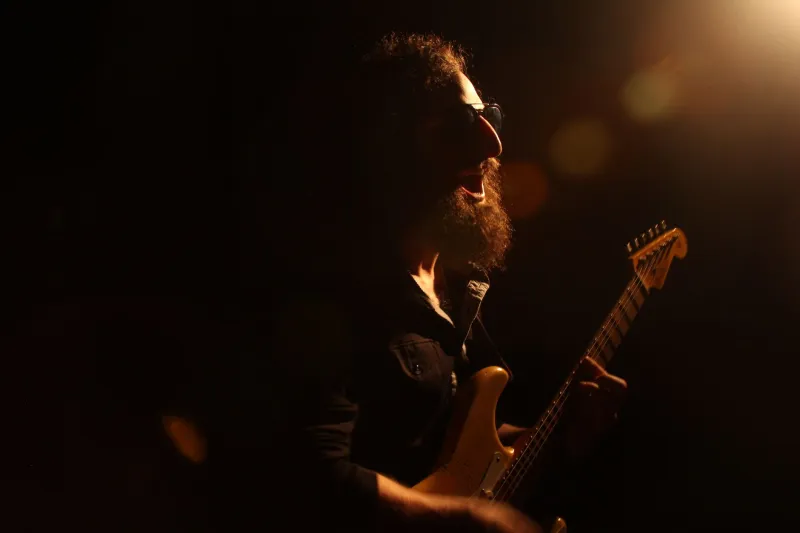
There's a particular kind of irony that only shows up in music. The artist who refuses to play the game ends up rewriting the rules for everyone else. Dwele hasn't been chasing playlists or manufacturing viral moments, and yet here we are — watching a whole generation of R&B and soul artists quietly model their careers after his. Not his hits. His approach.
That's a different thing entirely.
The Loudest Thing He Never Said
Let's be honest about what the music industry has been demanding for the last decade. Constant output. Perpetual engagement. A steady drip of content designed to keep algorithms fed and streaming numbers climbing. The pressure on artists — especially in R&B and soul — to stay visible at all costs has never been heavier.
Dwele didn't comply. He never really did.
His discography reads like a deliberate act of patience. Albums spaced out with intention. Features chosen carefully rather than scattered everywhere. Public appearances that feel earned rather than obligatory. From the outside, especially by modern industry logic, it might look like restraint bordering on risk. But the results tell a different story.
When an artist like Dwele drops something, people stop. There's no scroll-past energy. There's no "oh, another one" fatigue. Because his releases don't come with that exhaustion baked in, every single one of them lands with more weight. That's not an accident. That's a philosophy in action.
What the New Generation Is Actually Watching
Spend any time in conversations with younger soul and R&B artists — the ones coming up through cities like Atlanta, Chicago, Houston, and yes, Detroit — and a pattern starts to emerge. They're not just citing Dwele as a vocal influence or a production reference. They're studying how he moves.
There's a quiet but real shift happening in how a certain tier of artists thinks about success. The viral hit is no longer the automatic goal it once was. The question isn't just "how do I blow up?" anymore — it's "how do I build something that lasts?" And when those artists look for a working model of that second question, Dwele's career keeps coming up.
His trajectory proves something that a lot of people in the industry still struggle to accept: you don't have to sacrifice artistic integrity to build a dedicated audience. In fact, the integrity might be why the audience is so dedicated. Fans who found Dwele through Subject or Sketches of a Man or W.ants W.orld W.omen didn't just add him to a playlist and move on. They went deep. They stayed. They brought other people with them.
That kind of fan loyalty doesn't come from volume. It comes from trust.
Authenticity as Strategy (Even When It Wasn't Meant to Be)
Here's where it gets interesting. Dwele wasn't playing a long game in the calculated, board-room sense. He wasn't sitting in a meeting somewhere deciding that restraint would be his brand differentiator. He was just making music the way he believed it should be made — on his own terms, at his own pace, without compromising the sound or the soul of it.
But the effect of that consistency, over time, became something that looks a lot like strategy in retrospect.
In a culture where everyone is optimizing for attention, the artist who isn't optimizing for attention becomes fascinating by default. There's a counterintuitive pull to it. The less Dwele seems to need your validation, the more you find yourself wanting to give it. That dynamic plays out in how critics write about him, how DJs talk about him on air, and how fans evangelize his music to anyone who hasn't heard it yet.
Authenticity, when it's real and sustained, becomes its own form of influence. Maybe the most durable kind.
The Trend That Didn't Know It Was a Trend
Look at the artists who've been generating serious critical buzz in soul and R&B over the last few years. The ones with genuine longevity, not just a moment. There's a thread running through how they operate — a preference for craft over clout, for emotional depth over surface-level relatability, for building a body of work rather than a highlight reel.
Nobody held a summit and decided this was the new direction. It emerged. And one of the clearest north stars for that emergence has been Dwele's example.
When an artist's counter-cultural stance quietly becomes the culture, that's not just influence — that's legacy building in real time. The artists who were supposed to be winning by chasing trends are still chasing them. Meanwhile, the blueprint Dwele laid down keeps getting more relevant, not less.
Soul on Its Own Schedule
There's something worth sitting with here. The music industry moves fast, and the conventional wisdom is that artists have to move with it or get left behind. Dwele's career is a direct challenge to that assumption. Not a loud, confrontational challenge — just a quiet, persistent, decades-long demonstration that there's another way.
Soul music, by its nature, isn't supposed to be disposable. It's supposed to mean something. It's supposed to stay with you. The way Dwele has always made and shared his music reflects that understanding at a foundational level. He treats the work like it deserves time and space — because it does.
And now, watching younger artists recalibrate their own relationships with output, visibility, and artistic integrity, it's hard not to see his influence written between the lines. Not in a way anyone will necessarily announce or credit directly. But in the choices they're making, the patience they're practicing, the standards they're refusing to lower.
Standing still, it turns out, was the most radical thing he could have done. And it moved everything.