Breathe In: Why Dwele's Quiet Moments Hit Just as Hard as His Biggest Songs
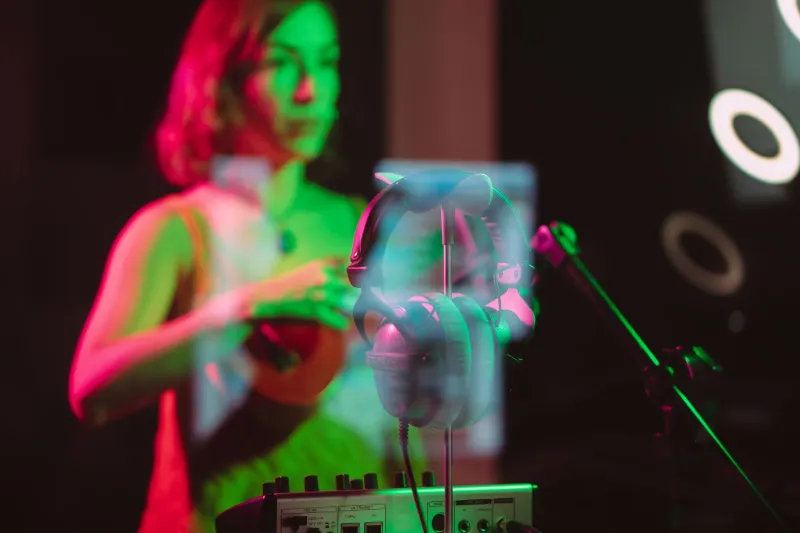
There's a moment on almost every Dwele album where the music seems to exhale. The drums pull back. The bass drops to a murmur. Maybe it's just his voice over a single chord, or an instrumental passage that feels more like a thought than a song. And somehow, right there in that stillness, everything he's been saying across the whole record lands differently.
That's not an accident. That's craft.
Dwele has built a catalog that rewards patience, and a big part of why his albums feel like albums — not just collections of singles — comes down to how he uses space. The interludes, the transitional moments, the low-key breathers tucked between bigger tracks: these aren't filler. They're architecture.
When Less Sound Means More Feeling
In an era where the pressure to front-load every song with a hook is real, Dwele has consistently gone the other direction. His approach to album sequencing treats the listening experience like a conversation — one where the silences matter as much as what's being said out loud.
Think about how jarring it would feel if someone talked at you nonstop for forty-five minutes without ever pausing to let you react. That's what a lot of modern R&B albums do, even great ones. Everything is maximized. Every second is filled. And while that can feel exciting, it can also make it hard to actually feel anything deeply, because you never get the chance to sit with it.
Dwele gives you that chance. Repeatedly.
His interludes often show up at emotional turning points — right after a song that hits hard, or right before one that needs room to breathe. They function like chapter breaks in a novel, telling you: slow down, absorb what just happened before we move forward.
The Sound of Thinking Out Loud
Some of Dwele's most memorable transitional moments aren't even traditional interludes in the conventional sense. Sometimes it's a full song that operates at half-speed emotionally — stripped of the layers you'd expect, leaving just enough instrumentation to feel intimate rather than finished.
That intimacy is doing serious work. When you hear Dwele in a more exposed sonic setting, it changes your relationship to the lyric. You're not listening at the music anymore. You're sitting inside it. The production choices — or the deliberate lack of certain production elements — pull you closer, make the words feel more confessional, less performative.
This is something that Detroit soul has always understood. There's a tradition in that city of letting the emotional weight of a song speak without dressing it up unnecessarily. Dwele carries that forward, not as nostalgia but as an active philosophy. He knows that restraint, applied correctly, is its own kind of statement.
Why Albums Still Need Room to Breathe
In the streaming era, interludes have become something of a controversial format. Listeners who shuffle playlists or skip through albums might never encounter them. Some artists have stopped including them altogether, arguing they interrupt the flow when someone's listening on the go.
But that perspective misses the point of what Dwele is building. His albums aren't designed for shuffle mode. They're designed to be experienced front to back, the way people used to listen before algorithms told them what to hear next. The interludes only make sense in that context — as deliberate punctuation in a longer story.
And honestly? That's part of what makes him a dedicated fan's artist. People who take the time to listen all the way through are rewarded with something you simply don't get from the singles alone. The full picture, with all its breathing room intact, is a different and deeper experience.
Silence as Subtext
There's also something worth noting about what Dwele tends to say — or not say — in these quieter moments. The emotional content of his interludes often mirrors the subtext running beneath his more produced tracks. Where a bigger song might explore longing or complicated love with a full band behind it, the stripped moments let that same feeling exist without explanation or embellishment.
It's the difference between someone telling you they're sad and you actually watching them be sad. One is information. The other is experience. Dwele consistently chooses experience.
That choice asks something of the listener — a willingness to stay present, to not immediately reach for the skip button when the energy drops. But for fans who meet him there, the payoff is real. Those quiet moments have a way of becoming the ones people remember most, the ones they find themselves returning to not because they're the catchiest parts of the record but because they're the truest.
What the Spaces Are Actually Saying
If you want to understand Dwele as an artist, start with what he doesn't do. He doesn't rush. He doesn't over-explain. He doesn't fill every available inch of sonic space because he can. He leaves room — room for you to bring something of yourself to the music, to map your own experiences onto what he's laying down.
The interludes and minimal moments in his work are invitations. They're saying: you don't have to be in motion right now. You can just be here. Let this settle.
In a culture that rewards constant stimulation and treats a two-second pause as dead air, that's actually a radical act. Dwele's been doing it quietly — literally — for years. And if you've ever found yourself replaying one of those understated passages on an album because something about it just stuck with you, you already know it works.
Soul, at its best, doesn't just fill you up. It makes space inside you. And that's exactly what Dwele's quietest moments have always been designed to do.