Less Is More: The Production Philosophy That Made Dwele a Soul Architect
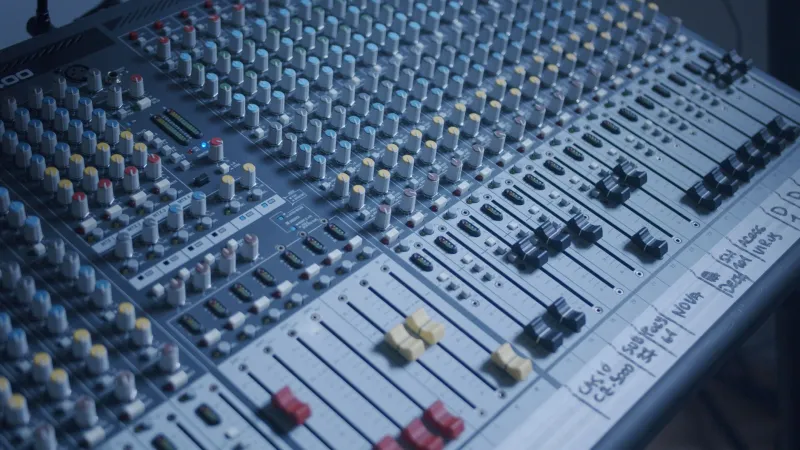
There's a moment in a lot of Dwele tracks where you expect something to drop — a big horn hit, a layered vocal stack, maybe a bass line that kicks the energy into another gear. And then it just... doesn't. Instead, there's space. Breathing room. A choice so deliberate it almost feels like a dare.
That's the Dwele difference. And if you've spent any real time listening to modern R&B and soul — the stuff that actually holds up, the records people still pull out years later — you've felt his influence even when you didn't know his name was behind it.
When Silence Becomes an Instrument
Production in the mainstream has always trended toward maximalism. The instinct is understandable: you want your record to compete, to fill space on the radio, to hit hard on streaming platforms optimized for the first fifteen seconds. The temptation to pile on is real.
Dwele never really bought into that logic. From his early Detroit days through releases like Subject and W.ants W.orld W.omen, his approach leaned into subtlety in a way that felt almost countercultural. Sparse drum programming. Vocal melodies that left notes unsung on purpose. Instrumentation that served the feeling rather than showing off the technique.
This wasn't minimalism for minimalism's sake. It was something more intentional — a studio philosophy rooted in the idea that a listener's imagination is one of the most powerful tools a producer has. When you don't fill every sonic inch of a track, you invite the audience in. You give them somewhere to live inside the song.
The Detroit Blueprint
To understand how Dwele's aesthetic took shape, you have to understand where it came from. Detroit has always had its own relationship with soul music — one that values realness over flash, groove over spectacle. That city's musical DNA runs through Motown's classic restraint, through the electronic minimalism of techno, through gospel choirs that understood the power of a held note over a busy arrangement.
Dwele absorbed all of it. Growing up surrounded by musicians and deeply embedded in Detroit's underground soul scene, he developed an ear for what a song actually needed versus what producers often assumed it needed. That distinction — subtle but massive — became the foundation of everything.
When he started building records, he brought that Detroit sensibility with him. The results were tracks that felt lived-in and warm rather than polished and processed. They had texture without clutter. Emotion without melodrama.
What He Chose Not to Do (And Why It Mattered)
Let's get specific, because this is where the real craft lives.
On a typical R&B production, vocal harmonies are stacked — sometimes four, five, six layers deep — to create that rich, full sound. Dwele often stripped that back to one or two carefully placed ad-libs, letting the lead vocal carry more weight and vulnerability. The result? You felt like someone was actually talking to you, not performing at you.
Drum programming followed similar logic. Instead of locking in a busy, syncopated pattern designed to show off the beatmaker's range, his tracks often featured simpler rhythmic frameworks that created pocket rather than complexity. That pocket — that groove — is what made people nod their heads without even realizing they were doing it.
Instrumentally, he leaned on live musicianship while resisting the urge to let every musician solo. A guitar chord here. A Rhodes line there. Choices made to support the emotional arc of the song rather than demonstrate virtuosity. In an industry that often confuses showmanship with artistry, that kind of restraint takes real confidence.
The Ripple Effect Across an Industry
Here's where things get interesting. Dwele never made a massive commercial splash in the way that some of his peers did. He wasn't topping the pop charts or getting heavy rotation on every major radio station. But the people who were paying attention — producers, songwriters, artists trying to figure out their own sound — were studying his records closely.
You can hear echoes of his approach in the work of artists who came up in the mid-2000s and later. That deliberate use of space, that willingness to let a vocal breathe, that choice to serve the song over the production — these became touchstones for a generation of neo-soul and contemporary R&B creators who were trying to find an alternative to the maximalist mainstream.
Producers who've worked in that world have talked openly about the influence of artists like Dwele on their process. The idea that a great record doesn't have to be a busy one. That authenticity can be a production choice as much as an artistic one. That the listener's emotional experience is more important than impressing other producers.
That's a cultural shift. And Dwele was part of planting that seed.
Authenticity as Strategy
There's a business angle here that's worth acknowledging. In a streaming landscape where millions of tracks compete for attention, the music that tends to build lasting, loyal audiences is often the music that feels genuinely human. Algorithms can surface a song, but they can't make someone come back to it fifty times over five years.
Dwele's catalog has that kind of staying power. People don't just listen to his records — they return to them. They share them with people they care about. They pull them out for specific moods and moments in a way that suggests real emotional attachment.
That's not an accident. It's the direct result of production choices that prioritized connection over spectacle. When you strip away the noise and let the music actually speak, you create the conditions for that kind of relationship between artist and listener.
The Lesson That Still Holds
The music industry changes fast. Trends cycle through in months rather than years now. What sounds fresh in January can feel dated by summer. In that environment, the temptation to chase whatever's working is enormous.
But Dwele's catalog stands as a pretty compelling argument for a different approach. The records he made — built on restraint, on intention, on knowing when to stop — haven't aged the way trend-chasing music tends to age. They still sound like themselves. They still hit.
For producers and artists navigating today's landscape, that's not just an interesting story about one Detroit soul singer. It's a blueprint. Maybe the most underrated one in modern R&B.
Knowing what not to do, it turns out, is one of the hardest skills in music. Dwele made it look effortless. And the soul world is still catching up.