Staying Still While the World Spins: How Dwele's Resistance Became the Blueprint
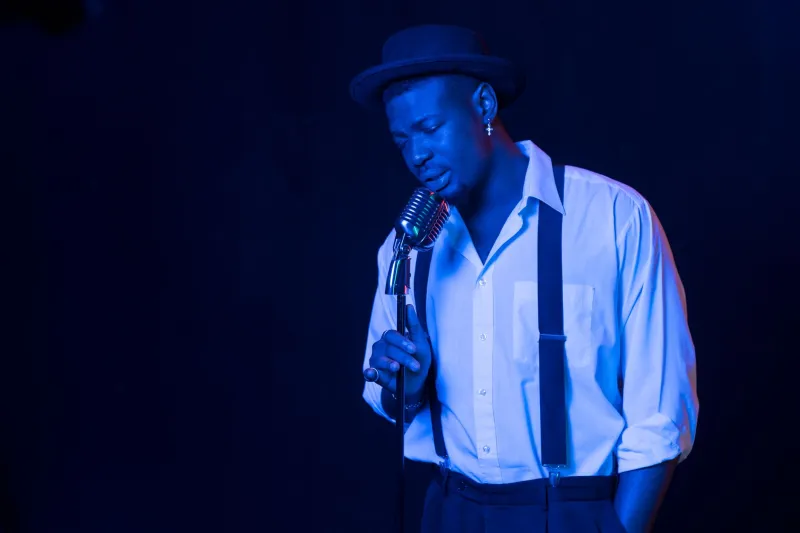
There's a certain irony baked into the music business right now. Labels are spending millions trying to manufacture authenticity. Producers are reverse-engineering "organic" sounds in Pro Tools. Artists are hiring consultants to help them seem like they don't have consultants. And somewhere in the middle of all that noise, Dwele is just... doing what he's always done.
No pivot. No rebrand. No desperate collab with whoever's trending on TikTok this week.
And somehow — somehow — that's become the most talked-about move in the room.
The Paradox Nobody Saw Coming
Here's the thing about trends: the moment everyone chases one, it's already dead. The music industry has always known this intellectually, but knowing it and acting on it are two very different things. The pressure to stay current is relentless, and most artists — even great ones — eventually fold under it.
Dwele never folded.
What's wild is that his refusal to chase the market didn't leave him behind. It put him ahead. While other artists were retrofitting their sound to match whatever Spotify algorithm was rewarding that quarter, Dwele was building something that algorithms genuinely can't replicate: a body of work with a consistent soul signature. And now, in 2024 and beyond, that consistency reads as visionary.
Producers who came up studying chart mechanics are quietly going back to his catalog. Younger artists who grew up in the streaming era are citing him in interviews like he's required reading. The anti-hype stance turned into the hype itself — which is about as pure a paradox as you'll find in this business.
What "Not Chasing" Actually Looks Like
It's easy to romanticize artistic independence when you're describing it in the abstract. But let's be specific about what Dwele actually did — and kept doing — when the industry pressure was loudest.
When neo-soul was peaking in the early 2000s, he wasn't trying to out-Erykah anyone. When the trap-influenced R&B wave hit and everyone started slowing their ad-libs and adding hi-hat rolls, he didn't touch it. When SZA and the bedroom-pop adjacent sound redefined what "alternative R&B" meant to a new generation, he didn't suddenly start recording in a lo-fi aesthetic to stay relevant.
He kept making Dwele music. Clean harmonics. Jazz-influenced chord structures. Lyrics that trust the listener to keep up. Production that breathes instead of suffocates.
That's not laziness or obliviousness. That's discipline. And discipline, in a culture that celebrates reinvention above almost everything else, is genuinely countercultural.
Why Major Artists Are Paying Attention
The artists studying Dwele's methods right now aren't doing it out of nostalgia. They're doing it because they've run the numbers and realized something uncomfortable: longevity and trend-chasing are almost mutually exclusive.
You can catch a wave. Plenty of artists have. But riding a wave means you're at the mercy of the ocean — and when it recedes, you recede with it. Dwele built something on solid ground, and that ground hasn't shifted.
There's a practical lesson in that for any artist trying to build a real career rather than a viral moment. The producers who've worked alongside him talk about his studio instincts in terms that sound almost philosophical — a commitment to serving the song over serving the moment. That's a distinction that's harder to hold onto than it sounds when you've got label reps in your ear telling you to add a feature or change the tempo.
Dwele held onto it anyway. And now holding onto it looks like the smartest thing an artist can do.
Restraint as Rebellion
We've gotten to a point in music where restraint genuinely is rebellious. That's not a small thing.
The default setting for modern music production is maximalism — layer everything, fill every frequency, leave no silence unoccupied. Streaming platforms reward volume in the literal sense: more releases, more content, more visibility. The algorithm doesn't care about your artistic vision; it cares about your upload schedule.
Choosing to do less — to release music on your own timeline, to leave space in a mix, to write a lyric that doesn't explain itself — is a direct rejection of that system. And rejection of a dominant system, by definition, is a form of rebellion.
Dwele has been quietly rebellious this whole time. We're just now building the critical language to describe what he was doing.
That's the real "Dwele Effect" if we want to put a name on it. It's not just that he influenced other artists sonically — though he absolutely did. It's that he modeled an entirely different relationship between an artist and their industry. One where the artist sets the terms. Where quality isn't sacrificed for quantity. Where a fanbase is cultivated rather than harvested.
The Magnetic Pull of Authenticity
No marketing campaign can manufacture what Dwele has built with his audience. That's worth sitting with for a second.
Dedicated fans don't show up because of a well-timed press cycle or a perfectly placed playlist placement. They show up because they feel a genuine connection to the music — and that connection was built over years of consistent, honest artistic output. It's the kind of loyalty that doesn't evaporate when the next big thing drops.
For the industry folks watching from a distance, that loyalty is fascinating and maybe a little baffling. Because it wasn't manufactured. There was no growth hack behind it. It happened because the music was real and kept being real, and real things attract real people.
That's the magnetic pull that no hype machine can replicate. And it's exactly why artists and producers with serious long-term ambitions are paying close attention to how Dwele operates.
What the Rest of the Industry Can Actually Learn
Let's be honest: not every artist can simply "be Dwele." His specific combination of vocal ability, production sensibility, and artistic conviction is singular. But the principles behind his approach? Those are transferable.
Know what you actually sound like. Protect that sound even when it's inconvenient. Build your audience with intention rather than urgency. Trust that quality compounds over time the same way interest does.
These aren't revolutionary ideas. But they're ideas that the industry keeps forgetting under the pressure of quarterly metrics and streaming targets. Dwele's catalog is a standing reminder that those ideas work — that they've always worked — and that the artists willing to commit to them are the ones still standing when the trends cycle out.
The world kept spinning. He stayed still. And now everyone's trying to figure out how he knew exactly where to plant his feet.
Soul. Sound. Dwele. That's not just a tagline — it's the whole strategy.