Against the Current: How Dwele's Stubborn Artistic Loyalty Became His Greatest Flex
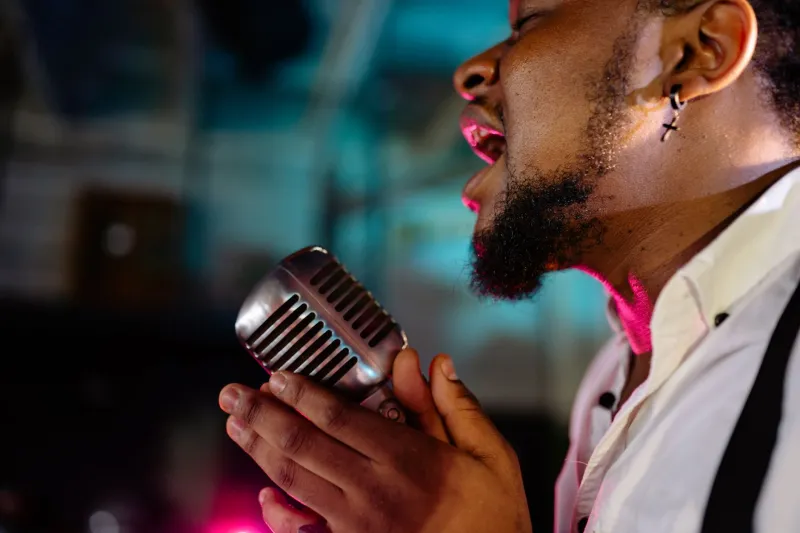
There's a moment in almost every artist's career where the pressure to evolve — or more accurately, to conform — becomes almost impossible to ignore. A new sound blows up, streaming numbers shift, and suddenly every A&R in the building is asking why you don't sound more like whatever's trending on TikTok this week. Most artists blink. Dwele never did.
And here's the thing: that refusal didn't quietly sink him. It made him untouchable.
The Industry Pressure Nobody Talks About
It's easy to look back at an artist's discography and call their consistency "visionary." But living through those moments in real time? That's a different story. When Dwele dropped Subject back in 2003, neo-soul was finding its footing in the mainstream, but the commercial lanes were already shifting toward a more polished, radio-ready R&B. The temptation to chase that sound — to sand down the edges and stack the hooks — was real.
He didn't.
Instead, Subject came out feeling like a conversation between Detroit's jazz-inflected past and the kind of raw emotional honesty that you couldn't manufacture. Songs like "Find a Way" and "I Think I Love You" weren't built for radio formulas. They were built for people. That distinction matters more than it might seem.
Fast forward to W.ants W.orld W.omen in 2008, and the landscape had shifted again. The industry had started leaning hard into glossy production, AutoTune experimentation, and a kind of maximalism that left very little breathing room. Dwele's response? More intimacy, not less. More space in the arrangements. More vulnerability in the vocal delivery. While others were piling on, he was stripping back.
What "Timeless" Actually Means
People throw the word "timeless" around so casually that it's lost most of its meaning. But when you apply it to Dwele's catalog, it's worth unpacking what that actually looks like in practice.
Timelessness isn't about avoiding the present. It's about refusing to be owned by it. There's a difference between an artist who sounds like their era and one who simply exists within it. Dwele's music has always belonged to the second category. You can hear the Detroit in it — the Motown DNA, the jazz undertones, the blue-collar emotional honesty — but it never feels like a museum piece. It breathes.
Put on Sketches of a Man and tell us it sounds dated. You can't. The production is warm and deliberate, the songwriting is specific enough to feel personal but universal enough to land for anyone who's ever been tangled up in love, loss, or the complicated space between the two. That's not an accident. That's what happens when an artist builds from the inside out instead of the outside in.
The Album Cycles That Defied the Moment
Let's talk specifics, because the pattern is worth tracing.
When Greater Than One dropped in 2011, the dominant R&B conversation was being shaped by a wave of artists blending electronic elements and a more club-ready sensibility into their sound. Commercially, it made sense. Creatively, it was a fork in the road. Dwele's album went a different direction entirely — collaborative, organic, rooted in real instrumentation and genuine emotional narrative. Critics and fans who'd been riding with him from the jump recognized it immediately. New listeners who stumbled across it couldn't place it in time, and that was the point.
The same thing happened with Thoughts in 2015. By then, streaming had fully reordered how music got consumed and how artists got measured. The pressure to produce content — to feed the algorithm, to stay visible — was reshaping creative decisions across the board. Dwele moved at his own pace. The album came when it was ready, not when it was strategically convenient.
These decisions cost him certain commercial metrics. They also preserved something more valuable: artistic integrity that compounds over time.
Why It's Actually a Competitive Advantage
Here's the counterintuitive truth that's easy to miss in the short term: in an era of viral moments and 30-second attention spans, an artist with a coherent, decades-long vision stands out more, not less.
Think about how discovery works now. Someone hears a Dwele record on a playlist, or catches a sample in a newer track, or gets put on by a friend who's been a fan since Subject. They go to the catalog and find something rare — a body of work that holds together. Every album informs the next. There's a throughline that makes deeper listening feel rewarding rather than overwhelming.
That's not something you can manufacture or buy with a marketing budget. It's the result of years of decisions made in favor of the music over the moment.
And in a culture that's increasingly hungry for authenticity — where listeners are sophisticated enough to smell a pivot from a mile away — that kind of track record is worth more than any trend cycle.
Detroit as a North Star
You can't talk about Dwele's artistic consistency without acknowledging the role Detroit plays in it. The city has always operated on its own frequency — independent, proud, deeply rooted in a musical legacy that spans Motown, techno, and everything in between. That identity doesn't bend easily to outside pressure, and Dwele carries that spirit into his work.
There's something almost defiant about making soul music that sounds like it was built to last when the entire ecosystem around you is optimized for the disposable. Detroit has always understood the difference between what's popular right now and what endures. Dwele absorbed that lesson early and never let it go.
What the Rest of Us Can Learn From It
For the fans who've been here from the beginning — and for the ones who are just now finding their way to the catalog — there's something genuinely instructive in watching how Dwele has navigated his career.
The music industry is full of cautionary tales about artists who chased trends and lost themselves in the process. Dwele's story runs in the opposite direction. It's proof that knowing who you are, and refusing to negotiate that away, isn't just artistically noble — it's strategically sound.
The songs hold up. The catalog deepens. The audience, though maybe smaller than it might have been under a different set of choices, is fiercely loyal and keeps growing as new listeners discover what's been sitting there all along.
That's the Dwele effect in its purest form. Not a viral moment. Not a chart position. Just music that keeps finding the people who need it, year after year, because it was made to last.
And honestly? That sounds like winning to us.